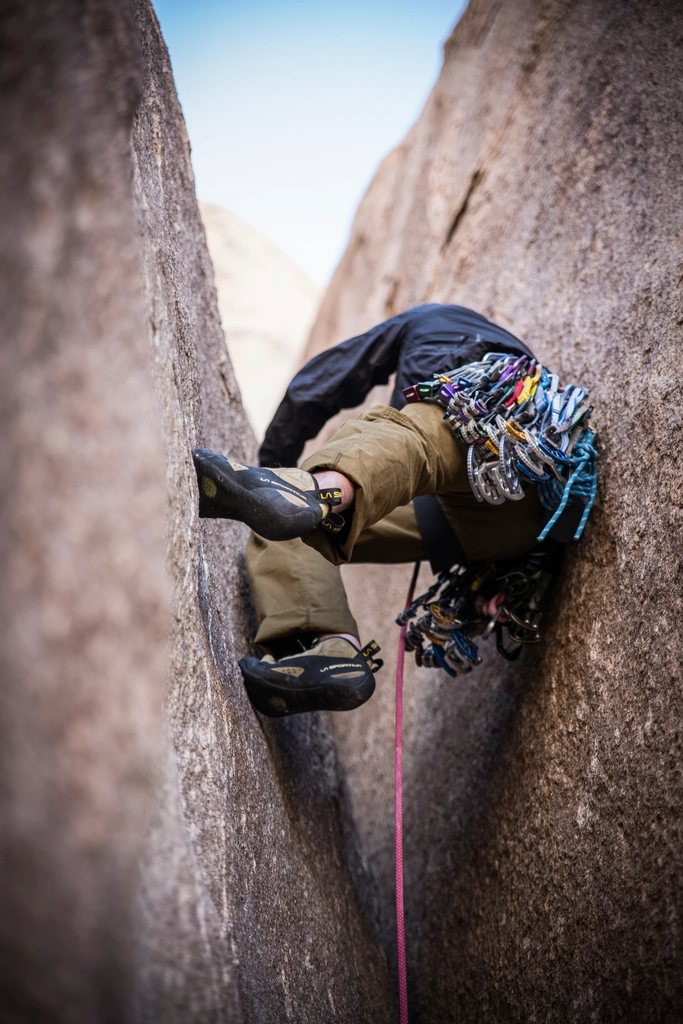
Finding Freedom in the Utah Desert
There’s something almost otherworldly about the desert spires of Utah. The warm sandstone catching the golden light of dawn, the dry wind whispering through narrow canyons—this is a climber’s paradise wrapped in solitude and challenge. For me, Utah wasn’t just a destination—it was a calling.
The First Ascent: When Passion Meets Stone
My first encounter with Utah’s granite giants was on the fringes of Moab. Towering above the red earth, these monoliths seemed both inviting and untouchable. I still remember the adrenaline rush as I chalked up, placed my first cam, and committed to the unknown. **Every movement was a dialogue between fear and trust**.
What struck me most was the purity of the climbs—no bolts, no crowds, just raw rock and raw ambition. On routes like Castleton Tower and Ancient Art, I wasn’t just climbing—I was conversing with the Earth’s history.
Lessons from the Rock
Climbing in the desert is a different beast. The sun is relentless, the rock can be brittle, and the exposure is real. But the rewards? Unmatched.
Here are a few insights the Utah granite etched into my soul:
- Patience pays off – Rushing on sandstone is a recipe for disaster. Trust the process, trust your placements.
- Respect the environment – These formations are fragile and sacred. Tread lightly and leave no trace.
- Partner up wisely – In remote areas, your belay partner is your lifeline. Choose someone calm, skilled, and communicative.
Meeting the Desert Veterans
During my journey, I had the chance to meet climbers who’ve called this region home for decades. One of them, a quiet legend named Ron, shared stories of first ascents in the ‘80s with a grin only experience can carve.
“This place,” he said, tapping the sandstone, “teaches you who you are. Fast.”
**Their humility and deep connection to the land were infectious**. Climbing with them shifted my perspective—from conquering routes to honoring them.
Indian Creek and the Discipline of the Splitter
One correction the desert taught me quickly: the towers around Moab are not granite at all, and the difference matters. Castleton and the Fisher Towers are sandstone, and an hour south, Indian Creek is Wingate sandstone at its purest, a formation that fractures in perfectly parallel, dead-vertical cracks that run for thirty metres without a single face hold. A splitter crack there is the same width from bottom to top, so a pitch is essentially one move repeated a hundred times. A hand crack is joyful; one a centimetre too wide or too narrow for your hands is a lesson in suffering, and grades at the Creek follow hand size as much as difficulty.
The rack is the strangest thing about the place. Because each pitch is one size, you do not carry a standard rack; you carry six, eight, sometimes ten cams of the same size. For a typical hand crack that means a stack of number 1 and number 2 cams, with a few 0.75s for the thin sections and number 3s where the crack flares. Offwidths eat number 5s and 6s. Climbers pool gear at the base and lower off fixed anchors, and the etiquette is strict: no tick marks, no added bolts, and pick up your tape when you leave. Tape gloves are the price of a second day of climbing.
Granite, Cobbles and the Rest of the State
Utah does have granite, and it is a four-hour drive north. Little Cottonwood Canyon, just outside Salt Lake City, is a valley of white quartz monzonite with slabs, splitter cracks and steep face climbing on rock that feels like a small piece of Yosemite. The routes are shorter, the approaches are easy, and the canyon mouth sits at roughly 1,700 metres, so it climbs well on summer mornings and in the shoulder seasons when the desert is too hot.
Then there is Maple Canyon, two hours south of the city, which looks like nothing else on earth: conglomerate walls made of river cobbles cemented together, so the holds are rounded stones the size of a fist or a football sticking out of a matrix. It is steep sport climbing on jugs, shaded and cool, and it is the summer venue when the rest of the state is baking.
Seasons, Rain and Where to Sleep
The season windows dictate everything. The desert around Moab and Indian Creek is best from mid-March to mid-May and from late September to mid-November; summer afternoons pass 38 degrees, and winter brings snow and iced cracks. Little Cottonwood runs from May to October, Maple Canyon from June to September, and this staggered calendar is why some climbers spend a whole year in the state.
The most important rule in the desert is the rain rule. Wingate and Navajo sandstone absorb water, and wet rock loses much of its strength; cams pull through soft cracks, holds snap, and the damage to the rock is permanent. After significant rain or snow we wait a full 24 to 48 hours, longer in the shade or after a soaking storm, and we check that the sand at the base is dry rather than trusting the surface of the wall. Nobody polices this except the community, which is why it works.
Sleeping is part of the culture. Most of the land around the Creek and Moab is managed by the Bureau of Land Management, and camping is allowed under a few firm rules that keep the access open.
- Camp only in established sites and pay the small fee at developed BLM campgrounds such as those along the Creek road.
- Pack out all human waste; the sand does not decompose it, and waste bags are sold in Moab and are required in many zones.
- No fires outside metal rings, and stay off the black cryptobiotic soil crust, which takes decades to regrow from a single footprint.
- Carry every drop of water in with you; there is none at the Creek, and four litres per person per day is the minimum in spring.
Beyond the Crux: What Utah Taught Me
By the end of my trip, I wasn’t just stronger—I was transformed. The desert didn’t just test my grip; it tested my grit, my patience, my purpose. Every route was a mirror, reflecting my fears, my drive, and ultimately, my joy.
Utah’s granite doesn’t hand out victories. You earn them, one move at a time. And in that struggle, you find something greater than summits—you find yourself.
Tips for Your Own Desert Odyssey
- Train for endurance – Long approaches and sustained pitches demand more than just strength.
- Hydrate aggressively – The dry heat can creep up on you. Water is your best ally.
- Go in spring or fall – Summer can be brutal. Plan wisely to make the most of the conditions.
The desert waits—not with open arms, but with open challenges. If you’re ready to listen, to learn, and to climb with respect, it just might change your life too.