An hour north of Vancouver, where the Sea to Sky highway leaves the fjord and turns inland, a granite monolith rises straight out of the trees. The Stawamus Chief is best known for its long routes, but at its feet, in a forest of cedar, fir and hemlock, lies one of the finest granite bouldering areas anywhere. Squamish bouldering is subtle, technical and green in every sense of the word, and it has taught us more about footwork than any other place we climb.
Granite under the Chief
The Chief is a dome of granodiorite, part of a vast belt of intrusive rock that solidified underground around a hundred million years ago. Ice did the rest. During the last glaciation the whole valley lay under kilometres of ice, and as it retreated some ten thousand years ago it left the walls scoured, the domes rounded and thousands of blocks scattered through the forest below. The most famous of these are the Grand Wall boulders, a dense cluster directly below the biggest face of the Chief, inside the provincial park and a few minutes’ walk from the road.
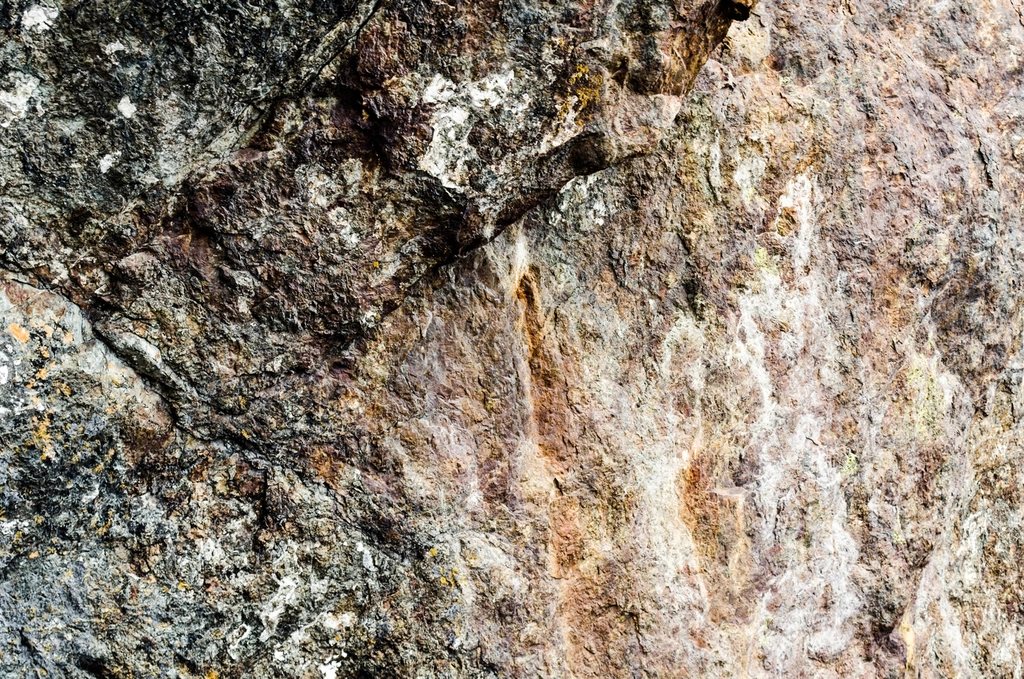
Glacial polish is the signature of the rock. Many surfaces are smooth enough to reflect light, with crystals worn flat and the grain reduced to a faint texture. On those surfaces, friction comes from rubber against a near-mirror finish, and you learn quickly that standing still is easier than moving. Where the polish has weathered away, the granite is coarse and crystalline, with sharp crimps, positive edges and the occasional perfect sloper. The two textures often sit on the same boulder, which is part of the puzzle.
Moss, rain and the life of a temperate rainforest
Squamish sits in a coastal temperate rainforest, and the numbers explain the character of the place: roughly two metres of rain a year, most of it between October and April. The boulders live in perpetual green. Moss carpets their tops, ferns grow out of their cracks, and the forest floor is a sponge of needles and roots that never entirely dries. A problem that was cleaned years ago will slowly grow a coat of moss again if nobody climbs it, and the tops of many blocks are still wild.
Rain shapes the climbing calendar and the etiquette. After a wet spell the rock takes a day or two to dry, longer under a thick canopy, and slopers stay damp long after the crimps have come round. The forest itself is fragile: dragging pads across roots strips the bark, and repeated foot traffic around a popular boulder turns a moss bed into mud. We carry pads rather than drag them, stay on established trails and accept that some tops are better left to the ferns. Cleaning a new line means removing moss that took decades to grow, and the community here has a strong tradition of doing that carefully or not at all.
Summer and September
The main season runs from May to October, and within it two windows stand out. Early summer, from late May into July, offers long days, warm temperatures and dry rock. It is the busiest time and the most sociable; on a Saturday in June the Grand Wall boulders feel like a friendly outdoor gym. July and August can be hot in the open, but the forest keeps the boulders cool and the granite rarely gets greasy in the way sandstone does.
September is our favourite. The crowds thin, the air cools, the rock is dry after the summer and the light in the forest turns golden. The first fronts usually arrive in October, and from then on it is a matter of catching dry weeks between storms. Winter climbing happens on the polished, quick-drying boulders on sunny days, but it is an opportunist’s game. Sea level, the valley is mild all year, so the limiting factor is water rather than cold.
Slabs, crimps and the granite style
Squamish is a place where the easy grades are as memorable as the hard ones. Slab problems, some no steeper than a staircase, demand faith in a smear on polished stone and a complete absence of hurry. They are climbed with the heels low, the hips over the feet and the hands doing almost nothing, and they fail people who can pull hard but cannot stand quietly. Beginners who spend a week here go home with better footwork than many years of gym climbing produce.
The steeper problems are about crimps and aretes. The granite fractures into small, positive edges that reward precise fingers and a strong lock-off, and many classics follow an arete or a corner with compression between two features. Cracks appear too, and a few of the best problems are miniature versions of the crack climbing the Chief is famous for. Tops are frequently the crux: a rounded mantle onto a mossy summit, done with the pads far below. Grades follow the V-scale, and the area’s reputation for stiff grades is deserved on the slabs and fair elsewhere. Our advice is to leave the ego at the trailhead and climb a lot of V0 and V1 before deciding what you are worth here.
Beyond the Grand Wall
The Grand Wall boulders are the heart of the area but not the whole of it. The North Walls, further along the base of the Chief, are quieter and hold longer, more varied problems. Across the valley and along the highway are further clusters, some steep, some on cleaner and less polished stone, that reward exploring once the classics are done. Most are within a short drive, and many of the best days we have had here involved a morning in one area and an afternoon in another, chasing dry rock and shade.
The Sea to Sky and staying a while
The highway from Vancouver to Squamish is around sixty kilometres and among the most beautiful drives in the country, hugging the fjord with the mountains rising on the far side. Squamish itself is a former logging and port town that has become an outdoor town, with grocery stores, cafes and an easy-going attitude to people in chalk-stained trousers. A walk-in campground sits beneath the Chief, minutes from the boulders, and there are other campsites and rentals in the valley. Weekends in high season fill early.
The town sits on the traditional territory of the Squamish Nation, and the Chief is a place of significance long before it was a climbing area. That is worth carrying with you into the forest, alongside the pads. The granite here is generous, the trees are old and the rain will come again soon. We climb in the gaps it leaves.